
Next edition: 2027
From 22 January 2027
Expected date, not yet officially confirmed.
Usually: From late January to early March
Parque Santa Catalina, Las Palmas de Gran Canaria
Official programme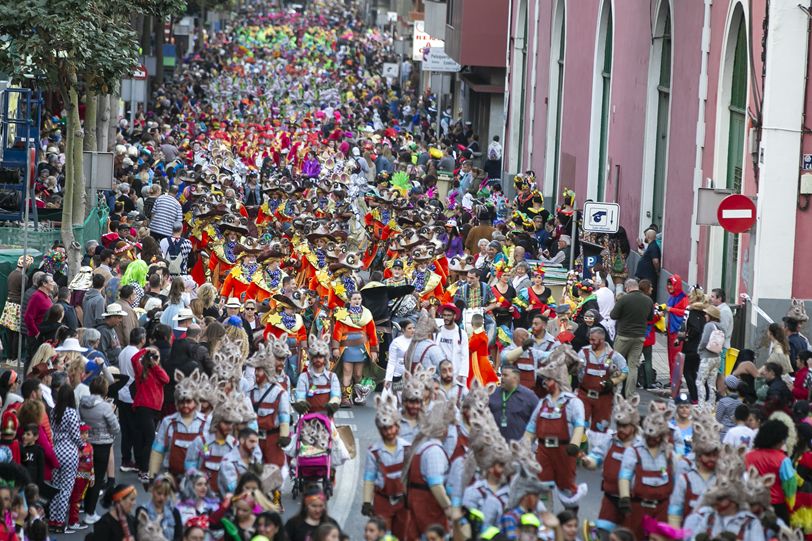
The Carnaval de Las Palmas de Gran Canaria is the island's biggest party and one of the oldest carnivals in Europe. For about six weeks, from late January to early March, the city fills with galas, murga and comparsa contests, free concerts and street parties. Its heart is Parque Santa Catalina, and its finale, the Burial of the Sardine, ends on Las Canteras beach.
This page is updated every year: the next edition's date is at the top, and the carnival events already listed on Holamojo are further down.
When is the Las Palmas Carnival
The carnival takes place every year between late January and early March. The dates move from year to year because they follow Lent: Carnival Tuesday is the day before Ash Wednesday, and in Las Palmas the party usually carries on for one or two more weekends, closing with the Gran Cabalgata and the Burial of the Sardine.
In 2027 Ash Wednesday falls on 10 February, so Carnival Tuesday is 9 February 2027. The organisers publish each edition's theme, poster and full calendar on lpacarnaval.com, usually in the autumn.
A short history
- 1574: the oldest written record of a masked ball in the city, at the house of canon Pedro León.
- 19th century: the Círculo Mercantil and the Gabinete Literario host grand masked balls, and carnival becomes the social event of the year.
- 1939 to 1975: the dictatorship bans carnival. In Las Palmas it survives as the "Winter Festivals", with costumes hidden under bedsheets on the way to private parties.
- 1976: Manolo García gets permission to bring carnival back onto the streets.
- 1986: the Carnival Foundation is created to run and promote the festival.
- 1995: the main events move to Parque Santa Catalina, still the centre today.
- 1998: the first Drag Queen Gala, now the carnival's best known event outside the Canaries. In 2018 it won the FELGTB Premio Pluma for its contribution to LGBTQ+ visibility.
The key moments
Galas at Parque Santa Catalina
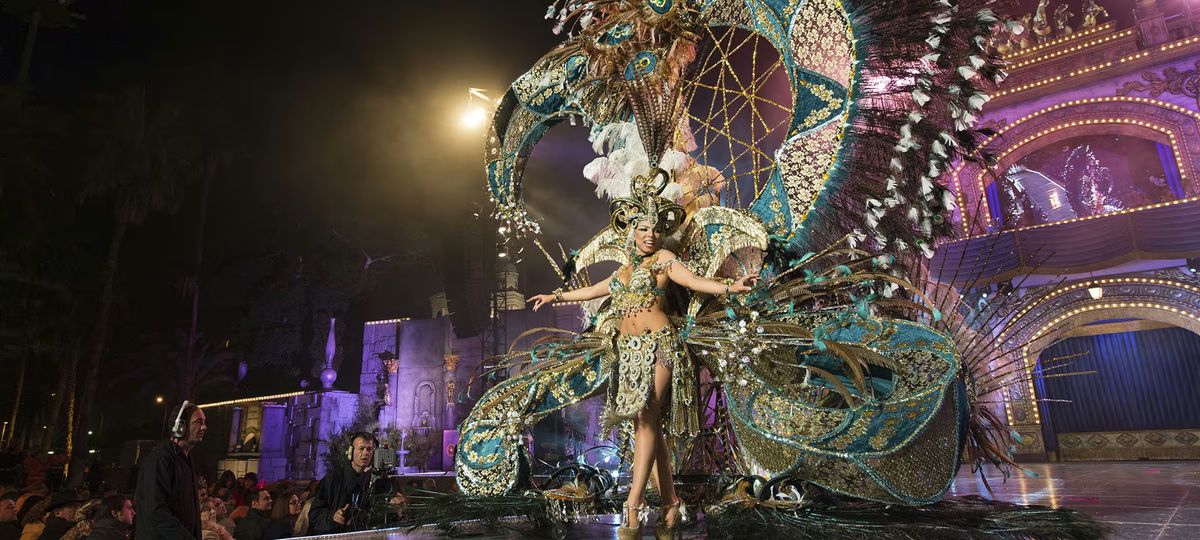
The Carnival Queen Gala and the Drag Queen Gala are the two big nights on the main stage. The Drag Queen Gala brings together contestants from all over Spain in costumes several metres tall and is broadcast live on television. Both need a ticket, sold through the official carnival channels, and they tend to sell out early.
Address: Parque Santa Catalina, Las Palmas de Gran Canaria (open in Google Maps)
Murgas and comparsas
Murgas are satirical singing groups with sharp lyrics about the year's news; their contest runs in rounds up to a grand final. Comparsas bring the rhythm and colour, with choreographies and parade costumes. Both contests fill the weeks before the galas.
Carnival nights and the mogollón
The carnival nights are free open-air concerts around Parque Santa Catalina. The mogollón is the street party that grows around them, especially at weekends: people in costume, music and dancing until the early hours.
Gran Cabalgata
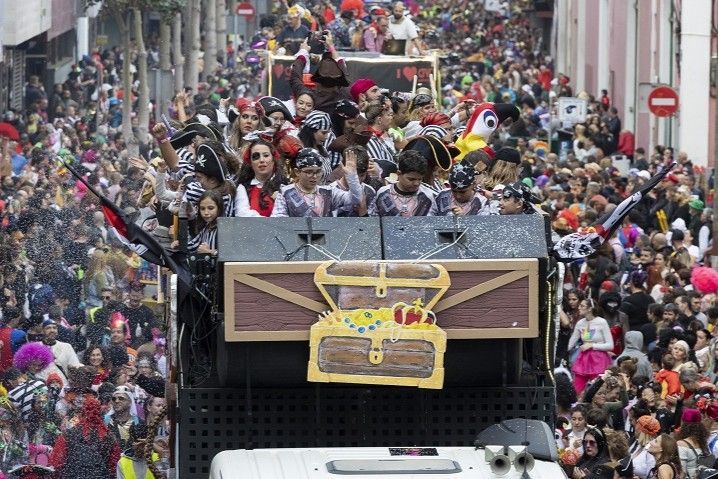
The big parade covers more than 7 kilometres of the city with over 100 floats, murgas, comparsas and thousands of people in costume, one of the largest carnival parades in Spain. It is the carnival's busiest day, so find a spot along the route early. There is also a children's parade, with floats made for the youngest, and Carnaval en Familia activities throughout the season.
Burial of the Sardine
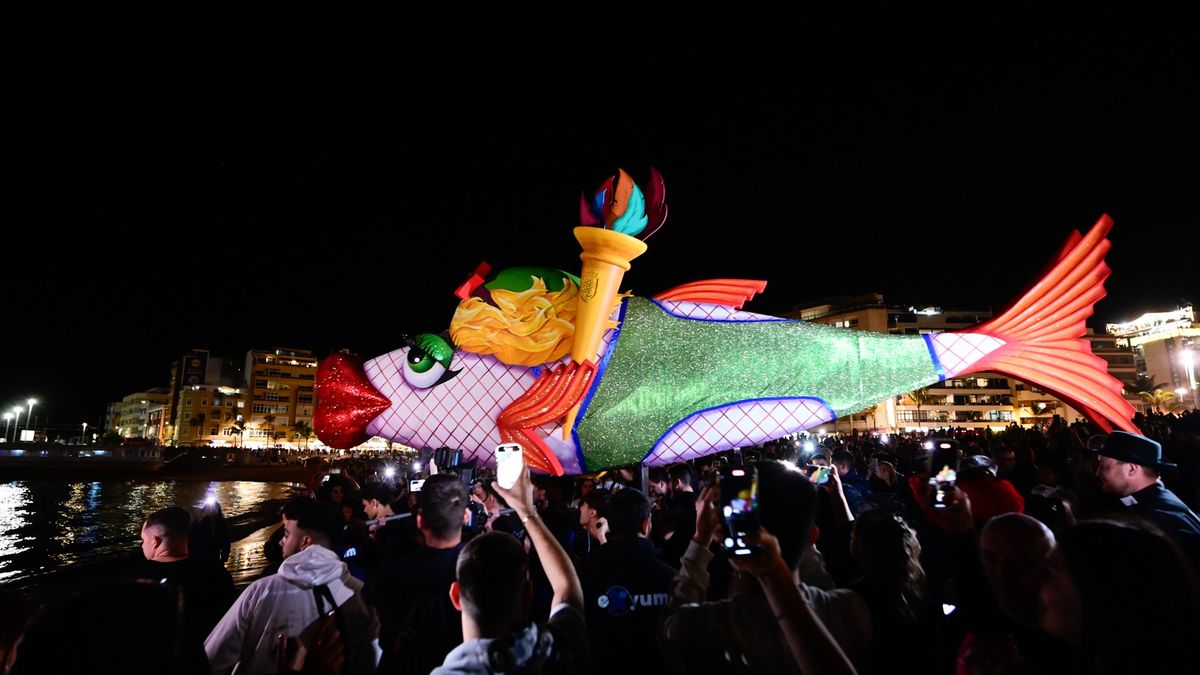
Carnival closes with a mock funeral: mourners dress in black and "weep" for the end of the party. The procession ends on Las Canteras beach, where a giant sardine is set on fire, usually with fireworks.
Address: Playa de Las Canteras, Las Palmas de Gran Canaria (open in Google Maps)
Practical tips
- Costume: practically required. Nothing elaborate is needed; a mask or face paint is enough to fit in.
- Getting there: the streets around the park close on the big days. Take the guagua (city bus), which runs extended hours, or walk. Coming from elsewhere on the island, plan your way back: transport fills up on the busiest nights.
- Tickets: only the galas need a ticket. The concerts, the mogollón, the parade and the burial are free.
- Food: there are stalls all around the carnival area; for a sit-down dinner, try Santa Catalina or the Las Canteras promenade, and book ahead on the big nights.
Each edition's dates and programme are published by the carnival organisers. Until they appear on the official source, the date above is an estimate. Check lpacarnaval.com before planning your trip.
More Guides
- Things to Do in Gran Canaria: The Ultimate Local Guide
- The Best Lively Bars in Las Palmas de Gran Canaria
- Where to Find Live Music in Las Palmas de Gran Canaria